The Physical layer has two responsibilities: it sends bits and receives bits. Bits come only in values of 1 or 0. The Physical layer communicates directly with the various types of actual communication media. Different kinds of media represent these bit values in different ways. Specific protocols are needed for each type of media to describe the proper bit patterns to be used, how data is encoded into media signals and the various qualities of the physical media's attachment interface.
The Physical layer specifications specify the electrical, mechanical and functional requirements for activating, maintaining and deactivating a physical link between end systems. At the physical layer, the interface between the Data Terminal Equipment (DTE) and the Data Circuit-Terminating Equipment (DCE) is identified. The Physical layer's connectors (RJ-45, BNC e.c.t) and different physical topologies (Bus, Star, Hybrid networks) are defined by the OSI as standards, allowing different systems to communicate.
We talk more about the Physical topologies in the Network Topologies section. More information on Ethernet can be found at our Ethernet Protocol section.
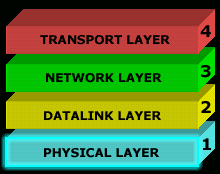
The first four layers define how data is transmitted end-to-end
There are no protocols which work at the Physical layer. As mentioned, Ethernet, Token Ring and other topologies are specified here.
Next: The OSI Model: Layer 2 - Datalink Layer
Free eBook - Endpoint Security

Enterprise-Class Cloud & Network Monitoring

Bandwidth Monitor

Wi-Fi Key Generator
Network and Server Monitoring

Follow Firewall.cx
Recommended Downloads
Cisco Password Crack
Decrypt Cisco Type-7 Passwords on the fly!
Automated Patching Solution

Firewall Analyzer